
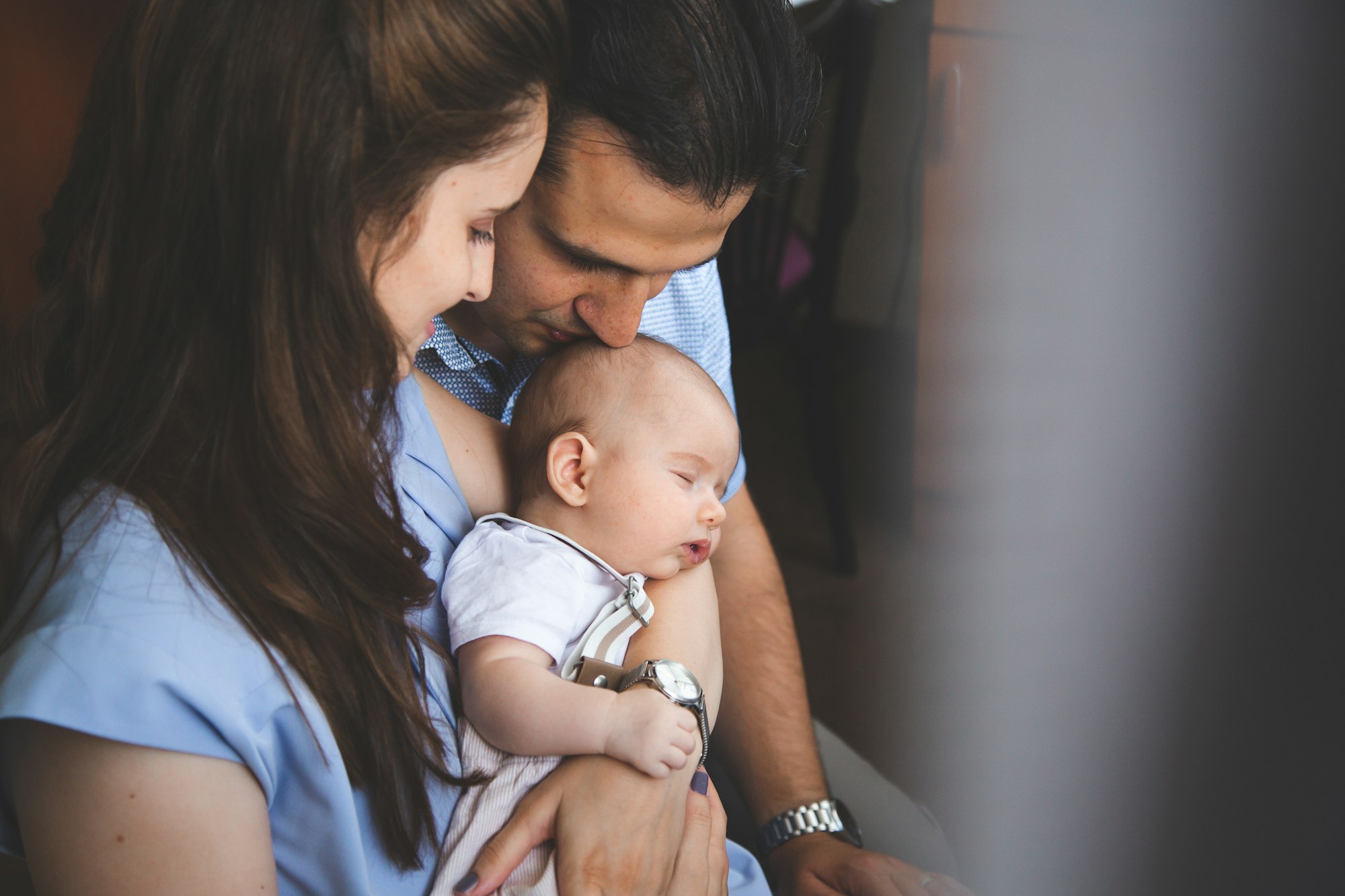
Yes, #TheyFeelPain … even after birth
By Hannah ·
There’s been a lot of talk lately in the news about when humans begin to feel pain, thanks to the Pain-Capable Unborn Child Protection Act being voted on in Congress, a bill that would prohibit abortions at 20 weeks post-fertilization or later, with some exceptions. The medical field long operated under the assumption that infants cannot feel pain (even performing operations on babies without pain relief), but common sense and research both tell us that babies do feel pain, beginning some time before birth. We rightly cringe, even weep, when we think of someone small and vulnerable experiencing horrific pain. Jesus himself often showed compassion on people by putting a stop to their physical pain, and he calls us to exhibit compassion as well. Speaking of the physical needs of those around us, Jesus says, “Truly I tell you, whatever you did for one of the least of these brothers and sisters of mine, you did for me” (Matthew 25:40).
“Pro-lifers don’t care about life once the baby is born.”
One criticism of the pro-life movement I often hear is an accusation of hypocrisy: “they don’t care about life once the baby is born.” One way that we can respect and protect life outside the womb is by protecting already-born babies from unnecessary pain. About a quarter of U.S. babies currently undergo a painful procedure as newborns: male circumcision.
Not a simple “snip of skin,” circumcision requires the foreskin to be forcibly separated away from the glans and then cut off. The exact method depends on what tools are used. Some infants receive no pain relief at all during circumcision, or only an ineffective sugar water pacifier. A “ring block” is considered the most effective, but it requires multiple injections of anesthetic, and one doctor I talked to said she feels “brutal” trying to get the injections just right when doing ring blocks for circumcisions. Personally, I remember the anesthetic injections I got when my midwife was repairing a small tear I got giving birth: they hurt quite a bit, and that’s compared to giving birth without pain meds!
Regardless of method of cutting or pain relief used, the pain levels of circumcision are severe. During the circumcision, babies scream and have an elevated heart rate, and sometimes even choke or stop breathing because of the pain. During or afterwards, they often go into a state of shock and exhaustion, which can be misinterpreted as deep sleep or “calmness.” Post-circumcision, the baby has sensitive and raw tissue in their diaper, and parents and researchers have reported varying levels of pain for weeks after the circumcision.
Sometimes necessary medical procedures do entail pain. But here’s a reason to be thankful and relieved: circumcision is not necessary! Beyond being “not necessary,” it has no overall benefit. Any benefit that is claimed for circumcision – for example, the claim of slightly lower HIV acquisition rates, which may or may not be true – can be achieved in ways that are simpler and non-invasive.
A few years ago my son broke his femur, the largest bone in the body. The doctor, in an attempt to be thorough, I guess, listed off all the potential treatments for broken femurs: traction, surgery to put in titanium plates, surgery to put in external fixators that would have to be removed with a later surgery, or a metal rod in the femur. But he concluded by saying that none of those painful procedures were necessary because in very young children the bone heals just as well without any special surgeries. A straightforward cast was the clear choice, and boy were we glad to hear it! As a mother, I wanted to avoid unnecessary procedures and unnecessary pain when treating my son’s broken bone.
But the broken femur was a case of an actual medical problem; in the case of the newborn male, when there is no injury or diagnosis, no illness present or looming, how much more should the choice be clear: pass on the pain. Say no to circumcision.
Little Images is a Christian organization working to equip the Church to fight against the cutting of children, but within that framework, our staff represent a variety of Christian perspectives, and each author’s ideas are his or her own. A medical professional reviews each blog post for accuracy. For any questions about Little Images, please see our about page or contact us.